Dress Smarter. Buy Less.
- Paulo Melo

- Jun 30
- 3 min read
The Foundation of an Intentional Wardrobe
A Question to Start
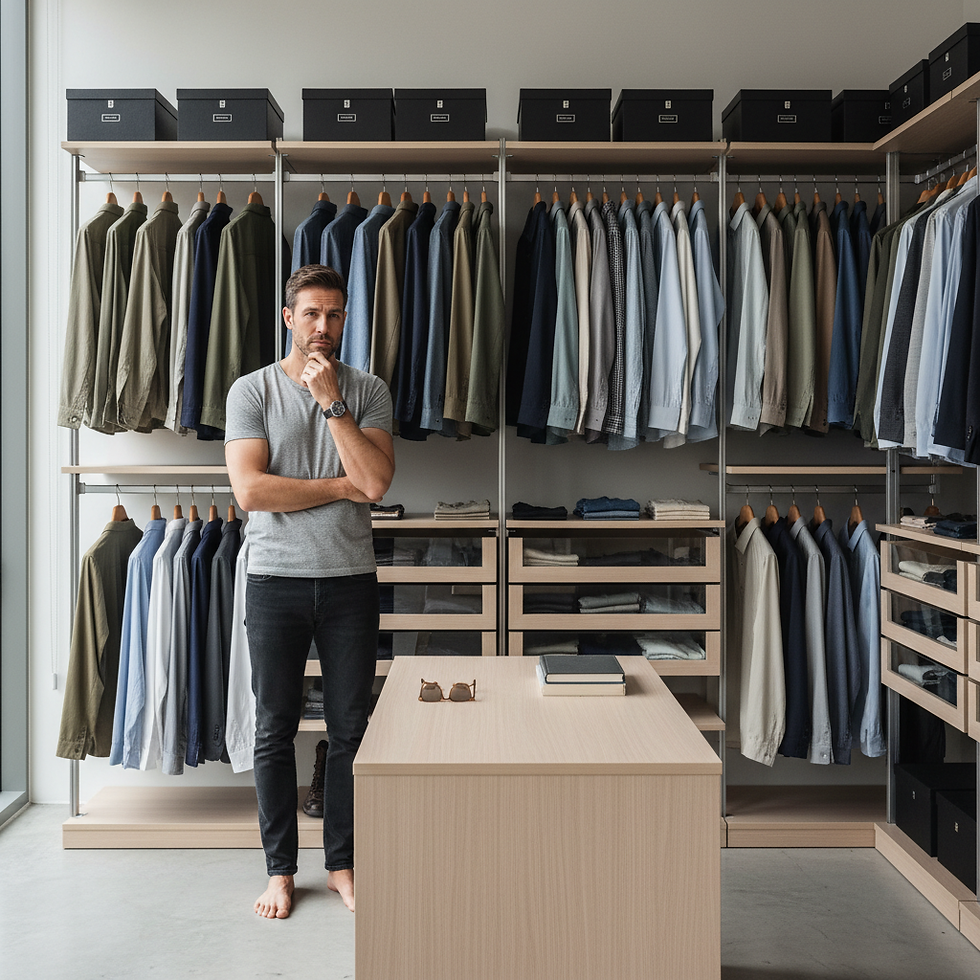
How many times have you stood in front of a full closet and thought...
"I have nothing to wear."
If you've ever felt that frustration, you're not alone.
Most men don't struggle because they own too few clothes.
They struggle because their wardrobe was never built with a plan.
A shirt bought because it was on sale.
Shoes purchased for one event.
A jacket that looked good in the store but doesn't match anything else.
Over time, the closet fills up, but the number of great outfits doesn't.
More clothing doesn't always create more options.
More often, it creates more confusion.
A Different Philosophy
FRAMEwear was built on a simple belief:
A great wardrobe isn't measured by how much you own. It's measured by how well everything works together.
Looking your best isn't about chasing trends.
It isn't about wearing expensive brands.
It isn't about impressing people.
It's about making intentional decisions.
When your wardrobe is built with purpose, getting dressed becomes simple.
Shopping becomes intentional.
Confidence becomes natural.
Your clothes become a tool that supports your life instead of another decision that drains your energy.
Why Most Men Waste Money
Most clothing purchases happen because of emotion.
A sale.
A trend.
A recommendation.
An Instagram ad.
Very few men stop to ask one simple question:
"Will this actually improve my wardrobe?"
Before buying anything new, ask yourself:
- Does it work with what I already own?
- Can I wear it in multiple situations?
- Will I realistically wear it often?
- Does it fit my lifestyle?
- Can I create at least five different outfits with it?
If the answer is "no" to most of those questions, it's probably not the right purchase.
Buy Less. Wear Better.
Think about the people whose style you admire.
Chances are, they don't own hundreds of different outfits.
They simply own fewer, better pieces.
A navy blazer.
A white Oxford shirt.
Dark jeans.
Brown leather boots.
A quality watch.
Nothing flashy.
Nothing complicated.
Just timeless clothing that works together.
That's intentional style.
The FRAME Principles
When building your wardrobe, remember these five principles.
1. Buy for Versatility
Choose clothing that can be worn in multiple settings and paired with many other pieces.
2. Quality Over Quantity
One jacket you'll wear for five years is better than three you'll replace every season.
3. Fit Comes First
A properly fitted $50 shirt will almost always look better than a poorly fitted $250 designer shirt.
4. Build Around Timeless Colors
Navy.
White.
Gray.
Olive.
Khaki.
Cream.
Brown.
These colors rarely go out of style and naturally work together.
5. Every Piece Should Earn Its Place
Every item in your wardrobe should serve a purpose.
If it doesn't, it's taking space from something that will.
A Different Way to Think
Imagine two closets.
The first contains eighty random pieces collected over ten years.
The second contains thirty-five carefully selected essentials that all work together.
Who gets dressed faster?
Who spends less money?
Who feels more confident walking into work, church, or dinner with friends?
The difference isn't the number of clothes.
The difference is intentionality.
FRAME Challenge
Open your closet today.
Choose one item you haven't worn in the past twelve months.
Ask yourself:
- Does it still fit?
- Does it reflect who I am today?
- Does it work with the rest of my wardrobe?
- Would I buy it again today?
If the answer is "no," consider donating it or replacing it with something more versatile.
Small intentional decisions create lasting change.
Key Takeaways
- A full closet doesn't guarantee great style.
- Build around timeless essentials.
- Buy fewer pieces that work together.
- Prioritize fit before brand names.
- Every purchase should have a purpose.
Continue Your Journey
Next Guide → FRAME Guide
The Essential Wardrobe Blueprint
Learn the timeless foundation every man should own before buying anything else.
Think About It
If someone looked inside your closet today, would they see a collection of impulse purchases or a wardrobe built with purpose?
FRAME Principle
"Style isn't about owning more. It's about choosing better."

Comments